Welcome to Sino Bearings web
24x7 HOTLINE:+86-28-81454188


 TECHNOLOGY
 FREQUENT Q/A
A tracked hydraulic excavator requires about fifty bearings for its basic operation (travel and rotation).Irrespective of its size and its use (earthwork, mining, demolition), it is made up of a crawler track chassis topped with a superstructure including the engine, hydraulic components (pump, motors, cylinders), the driving cab and the attachment (arm, boom, dipper, bucket).
Travel
The two track sets are each driven by a planetary reducer using 2 angular contact ball bearings or tapered bearings - for supporting the reducer - and 14 needle roller bearings - for planet gears.
► 32 bearings are thus necessary so that the machine can move.
Swing
The superstructure pivots 360° thanks to a slewing ring of about 1.50 m diameter fixed on the straight truck chassis and a hydraulic motor or a planetary reducer. This includes 12 needle roller bearings for the planet gears and 2 spherical roller bearings for the shaft support.►14 bearings contribute to the swing of the superstructure.
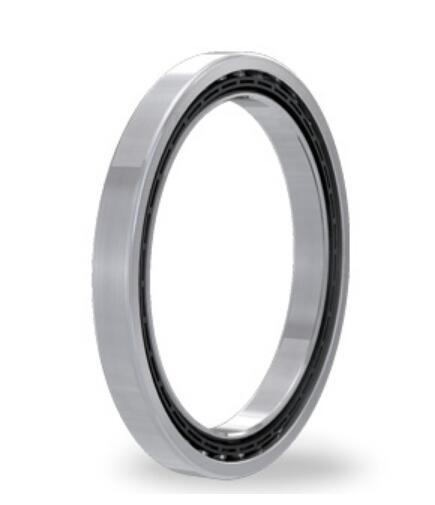
Note that the plain bearings equip the various joints located on the boom, the dipper and the bucket.
This article is prepared by the SINO BEARINGS (Sinoti Tech) engineering team, based on published bearing standards (ABEC / ISO P0–P2), material datasheets, and field application experience across industrial, food, medical and aerospace uses. For manufacturer background, certifications and facilities, see our About page.
Related articles:
What role do bearings play in these applications, and why is How to Achieve Longer Gearbox Service Life-KMK Bearings How can vibration shaker testing technology help manufacture What Makes Up a Bearing?-KMK Bearings How to avoid common failures in plain bearings-KMK Bearings


