Welcome to Sino Bearings web
24x7 HOTLINE:+86-28-81454188


 NEWS
NEWS INDUSTRY NEWS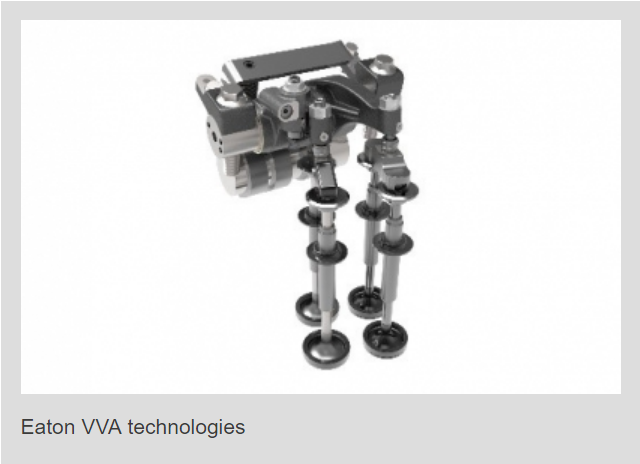
Eaton has announced its Vehicle Group has introduced a complete portfolio of variable valve actuation (VVA) technologies to help commercial vehicle manufacturers meet forthcoming emissions regulations in China. The regulations are expected to be significantly more stringent than current standards.
“Automakers that manufacture vehicles for the China market are researching how to achieve future emissions regulations,” said Fabiano Contarin, product director, Commercial Vehicle Valvetrain, Eaton’s Vehicle Group. “Eaton is the right partner to support this effort because of our considerable experience helping European and U.S. auto and truck makers develop emissions-reducing technologies."
Eaton’s VVA solutions are based on two building blocks: 1) a rocker with a switchable capsule, and 2) a split rocker for full deactivation. By combining these two building blocks, several VVA strategies can be utilized in virtually any engine architecture – single and dual overhead cam, as well as cam-in-block engines – and engine displacement ranging from 2.0 liters to 15.0 liters.
Vehicle Group’s CDA technology lowers CO2 and NOx simultaneously
Cylinder deactivation (CDA) is a VVA technology that involves deactivating the intake and exhaust valve opening, as well as the fuel injection on some cylinders when an engine is running at low load. This increases the temperature of the exhaust gases, allowing the nitrogen oxide (NOx) aftertreatment to remain efficient at low load and decrease carbon dioxide (CO2) emissions.
CDA is an ideal solution for commercial vehicles that make frequent stops, such as sanitation or delivery trucks. It decreases both NOx and CO2 simultaneously, making it more efficient than other technologies that cut NOx at the expense of increased CO2. CDA can reduce NOx by more than 40% and CO2 by 5%-8%.
Late intake valve closing technology reduces emissions
Eaton also offers Late Intake Valve Closing (LIVC), which delays the closing of the intake valve, so the effective compression ratio is lower than the expansion ratio. LIVC increases the thermal efficiency of the engine, improving fuel economy and reducing CO2 emissions. Reducing the amount of airflow through the engine with a shorter intake stroke raises the exhaust temperature by 40 degrees Celsius, contributing to the thermal management of the aftertreatment. Overall, LIVC can reduce CO2 by 1%-2%, and is most efficient for applications such as over-the-road trucks.
This article is prepared by the SINO BEARINGS (Sinoti Tech) engineering team, based on published bearing standards (ABEC / ISO P0–P2), material datasheets, and field application experience across industrial, food, medical and aerospace uses. For manufacturer background, certifications and facilities, see our About page.
Related articles:
John Crane Introduces Versatile Next-Generation Coaxial Seal Zero-Max Introduces CD Power-Series Couplings-KMK Bearings Nidec Introduces MGC300: A Next-Generation Multifunction Gea Electromate Introduces Maxon HEJ 70 High-Efficiency Joint fo OnlineMetals.com Introduces Custom-Cut Option on Machine-Rea


